
Lamar County Criminal Docket Searches
Start with the county's Online Services page. The link there reads "Lamar County Judicial Records Search." It opens a Tyler Odyssey service covering county criminal and civil case information. The site does not always load cleanly. Expect uneven results. A separate County Clerk self-service index opens with a disclaimer. The clerk calls it a convenience tool, not a certified source. The clerk suggests trying spelling variants of a name.
When the local portal stalls, register for re:SearchTX. The state system supports Cases, Filings, Text, and Hearings searches. Coverage and document fees vary. You can also ask the clerk in person or by mail. Name the court, the cause number, and the party. Add a rough filing date and the exact document you need.
- Read the citation, bond paper, or notice to identify the court.
- Search with the full cause number and preserve punctuation.
- Note the entry and the date of its source.
- Confirm a current setting or final order with the clerk.
Four Lamar Criminal Court Routes
Lamar County splits its criminal records by level. Felonies land in the 6th or 62nd District Court. The District Clerk keeps those case files. County misdemeanors show up in County Court or County Court at Law, where the County Clerk holds the records. Class C offenses may instead sit with one of six Justice Courts. Fine-only state offenses and city ordinance cases can stay in Municipal Court in Paris, Reno, Blossom, or Roxton, so the city that wrote the ticket often controls where the court docket lives.
| Level | Court | Fallback |
|---|---|---|
| Felony | 6th or 62nd District | District Clerk, 903-737-2427 |
| Misdemeanor | County courts | County Clerk, 903-737-2420 |
| Class C | Justice Court | Issuing JP |
| City citation | Municipal Court | Named city court |
Both clerks work at 119 N. Main Street in Paris. They do not keep the same cases, so ask which office holds yours. Call ahead about a public computer, too, since neither clerk publishes its location.
Criminal Dockets: What They Show
Two official Lamar samples show the local fields. A County Court arraignment docket lists court, date, time, judge, case number, charge, offense grade, file date, prosecutor, defense attorney, bond type, amount, bondsman, memo, and jail days. The District felony sample adds case style, hearing type, charge shorthand, bond date, and status. Read blank fields carefully. An empty space does not prove that no attorney or filing exists.
| Cause number | The court identifier; copy every digit and separator. |
|---|---|
| File date | When the case entered the record, not the incident date. |
| Hearing type | The reason for a setting, such as arraignment. |
| Bond | A time-sensitive security entry, not a fine. |
| Status | A snapshot, not always the final result. |
A docket is just a procedural index. The complaint, indictment, plea papers, orders, and judgment live in separate documents. When the outcome matters, request the actual signed order from the clerk.
Read Lamar Arraignment Entries
The county sample carried the title "Criminal County Clerk Docket" and listed a morning arraignment. The District version labeled an Arraignment Hearing. A later PTR date sat on the same page. Arraignment is the stage where the accusation and the plea process get addressed. PTR is pretrial-related shorthand in that District docket. Confirm its meaning through the notice or the clerk in a given case.
- Setting
- A scheduled date and time, not proof the hearing occurred.
- State Atty
- The prosecutor field.
- Surety bond
- A bond backed by a surety or bondsman.
- Disposition
- The recorded outcome, often found in a judgment or dismissal order.
Jail days and an "Active" bond status can change after the docket is posted. They are not a live jail roster. Nor do they establish guilt.
Criminal Case Stages on the Docket
A case can move from citation, complaint, or arrest to filing, bond, arraignment, pretrial, plea or trial, sentencing, and later events. The usual path is filing → bond → arraignment → pretrial → plea or trial → judgment → post-judgment activity. Several entries may share one date, and not every stage appears on a public calendar.
Take dismissal, deferred adjudication, acquittal, conviction, probation action, bond forfeiture, remand, or appeal from the register and the signed order. Lamar publishes no complete disposition-code legend. Keep unfamiliar abbreviations exactly as written until the clerk confirms them.
Charge is not outcome. A charge line states an allegation carried on the setting record. It does not establish a conviction or sentence.
Lamar's Posted Docket PDFs
The official Lamar docket directory carries dated County Court criminal PDFs. Each header ties a setting to a court, judge, date, and time. The PDFs preserve a useful historical view of the criminal docket. But a later order can still move any setting. They are not a live register.
The state's Texas OCA misdemeanor activity tool filters official statistics. It tracks aggregate activity rather than any single case.
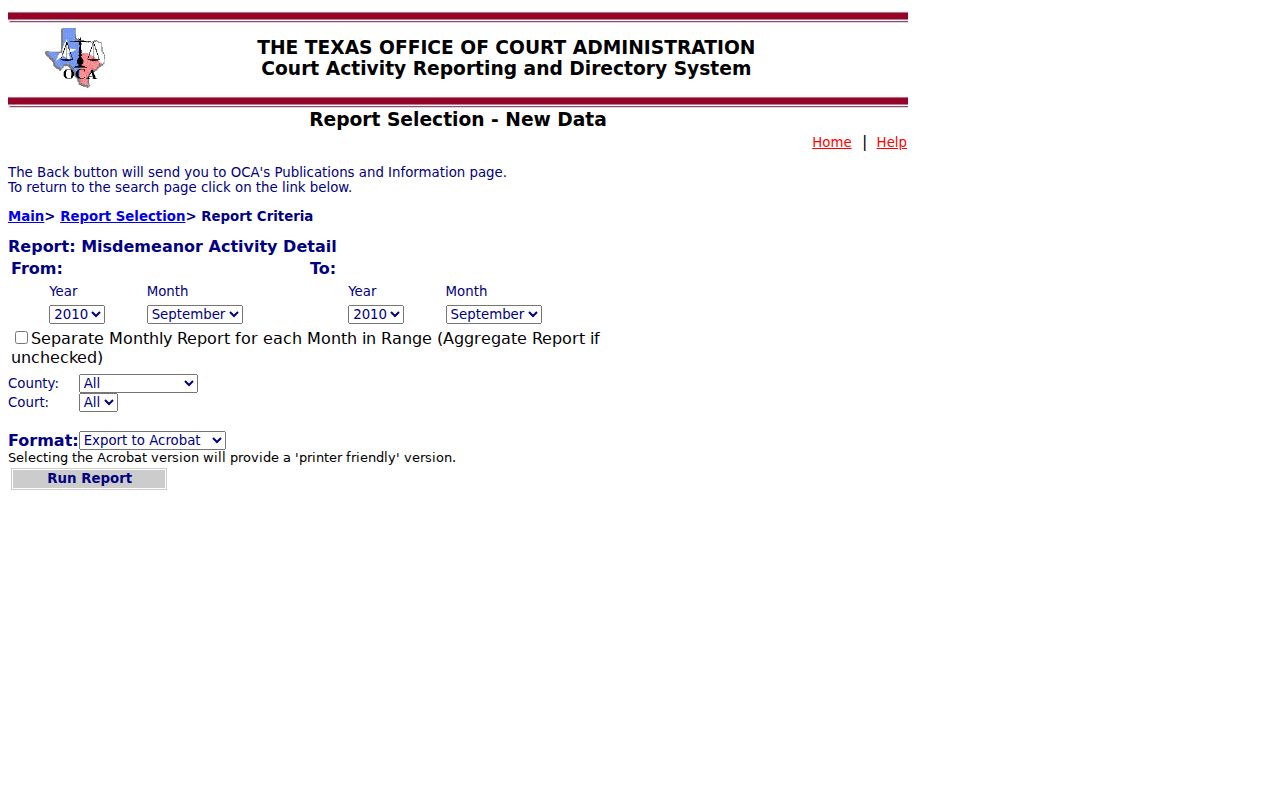
Write down both the PDF date and the date you viewed it. Then check the register, the attorney notice, or the clerk before relying on a setting.
Lamar County Criminal Docket Courts
District Court work in Lamar County runs through the 6th District Court and the 62nd District Court. County Court at Law keeps its own county docket. Appeals go to the Sixth Court of Appeals. Its appellate docket is a different animal from the trial file.
For Class C matters, the citation decides the route. JP Precinct 5 Place 1 lets you search by citation, license, date of birth, or plate. Personal name and business name work too. Paris links TrafficPayment, while Reno posts its own record-search directions. Payment services are not full criminal archives.
Note: a city or JP citation may not appear in county Tyler results.
If the Result Is Missing
A missing outcome has several common causes. The posted file may have covered only arraignments. The final order may not be in the index. The case may belong to another court, or access may be restricted. Copy the cause number and court. Try spelling variations, and ask the correct clerk for the judgment, dismissal, plea order, or other result document.
For District Court, call 903-737-2427. For county courts, call 903-737-2420. Confirm hours and request methods before you travel or mail anything. State law lists a $5 District Clerk search fee when no cause number is supplied. Page and certification fees can also apply.
Never read a blank result as a dismissal. It may simply reflect the limits of the snapshot you searched.
Access Rules for Criminal Dockets
Criminal docket access in Texas works differently from ordinary record requests. The Texas Judicial Branch policy puts adjudicative records outside the usual track. The Texas Public Information Act does not govern them. Instead, court rules and statutes control what the clerk can release. Send a blanket public-information request and it may land with an office that cannot help.
Some limits go further. Juvenile files answer to Texas Family Code Chapter 58. Sealed or expunged records can be withheld too. So can protected family material and sensitive identifiers. An index entry may note an event while the paper itself stays restricted. Ask the clerk where the bar comes from. Is it a statute, a court order, or just the online display?
Verify the source. The County Clerk warns that its index is not a certified underlying document. Request certification when authentication matters.
Confirm a Changed Lamar Setting
A criminal setting can shift without much notice. In Lamar County, the District Court leaves settings and continuances to each judge's process. The District Clerk tells the attorneys of record, and no trial setting drops without the court's consent. A dated PDF can sit online even after a newer order resets the case.
So check the PDF against the latest docket entry. If you have a lawyer, call that office first for the latest word. For a felony setting, ask the District Clerk. The court coordinator can confirm it too. Ask whether the date stands, has been reset, or is canceled. For a misdemeanor, the County Clerk or County Court at Law handles it. The Lamar County Court Schedule walks through the date-check workflow.
Note: An old docket PDF does not prove a future appearance is canceled.